
Discover the Olfactory families world
As the blending of perfume ingredients can span multiple olfactory families, this categorization provides a general framework for describing a fragrance. This way, even without experiencing the scent firsthand, we can gain a sense of its aroma.
Citrus or hesperidic family
This olfactory family brings together citrus fragrances, featuring fruits such as lemon, orange, mandarin, bergamot, lime, grapefruit, citron, kumquat, and yuzu, not forgetting petit grain (essential oil obtained from the leaves of the bitter orange tree).
Citrus notes are typical of Eau de colognes, light and fresh, simple compositions, which does not mean that they are simple since to achieve enough projection and duration, it is necessary to skillfully combine them with more intense notes to improve their fixation without detracting from their freshness.
By cultural tradition, citrus fragrances are highly appreciated in Mediterranean countries. At Àuria Perfumes, we only work with top-quality raw materials that guarantee an optimal scent that fits the brand's values and satisfies consumers' expectations.


Floral family
Flowers, the absolute protagonists of perfumes, originate from the floral family, the best known along with citrus and the one most identified with feminine fragrances due to their delicacy and sensuality to the olfactory composition.
Depending on how the floral notes are worked into the fragrance, it will be more classic, romantic or transgressive, subtle, or intense.
The most popular floral notes are rose, jasmine, neroli, lily, violet, magnolia, tuberose, mimosa, geranium, heliotrope, camellia, cyclamen, cherry blossom, almond blossom, apple blossom, gardenia, sweet pea, sunflower, daisy, broom and ylang ylang.
Fougère or Green family
Fougère is a French term meaning fern, a plant that proliferates in humid forests, whose fragrance reproduces the scents of moss and damp earth and evokes sensations of freshness.
The fougère family evokes fragrances that can be smelled in a forest and suggests a sense of cleanliness and vitality.
Because it combined green and earthy notes, the fougère family has traditionally been attributed to masculine fragrances. At the beginning of the 20th century, its usual structure was as follows: lavender, geranium, oak moss, patchouli, and coumarin. Today, this structure is more flexible and makes room for green, floral, and woody notes that bring new expressions to the Eau de parfum: sage sclarea, rosemary, basil, mint, cypress, anise, and tea are some examples.


Chypre family
The Chypre family has consolidated thanks to the success of the Chypre perfume, created by François Coty in 1917 and characterized by a green and woody composition evoking the scents that can be smelled on a Mediterranean island. However, it should be noted that Chypre fragrances have existed since Roman times, as there is evidence of them, thanks to an archaeological discovery on the island of Cyprus, where 4,000 years ago, there was a perfume factory that produced essences with native vegetable raw materials.
Chypre fragrances are universal, and when combined with floral and fruity notes, they tend more towards a feminine or masculine scent.
Frequent olfactory notes in the chypre family: bergamot, oak moss, cistus (rockrose), laudanum, patchouli and sandalwood.
Woody Family
Woody are compositions with an intense fixation and trail. Consumers prefer to use them in the year's cold months because they convey a warm sensation.
Woody notes bring warmth to the perfume and dry, comforting, enveloping, and creamy facets.
Frequent notes in woody fragrances: cedar, mahogany, fir, acacia, sandalwood, olive, ebony, papyrus, moss, cashmere or musky wood, smoky or burnt woods, and oud.

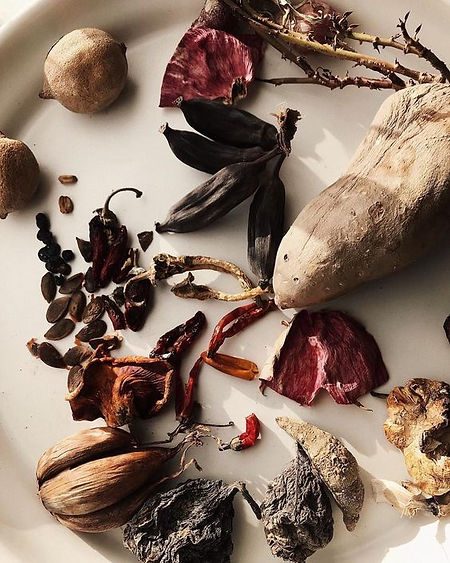
Oriental, Spicy or Ambery Family
Woods, resins, and spices give rise to the oriental, spicy or ambery family, typical of Arabian countries and increasingly appreciated by European consumers who have developed a more sophisticated taste for perfumery over the years.
Nowadays, it is common to find fragrances that play with contrasts, confronting fresh notes, such as citrus, with other deep notes that evoke warmth, such as spices and resins, which also add an exotic touch to the perfume.
Typical notes of oriental perfumes: pepper, cinnamon, turmeric, cumin, clove, saffron, nutmeg, cardamom, ginger, myrrh, patchouli, tonka bean, sandalwood, patchouli, benzoin, resinous balsams, vetiver, ambergris and tobacco.
Fruity family
The sweet, fresh, and natural aroma of mint and ripe fruits defines the fruity fragrance family, which includes all fruits except for citrus, which belong to a separate category. Fruity scents bring energy and joy to a fragrance, making them popular in both women's and children's perfumes, though they are used in different ways. In women's fragrances, fruit notes add a juicy, sensual quality, while in children's scents, they evoke a soft, gourmand world of flavor.
Fruity notes are crafted in fragrance laboratories because the natural scent of most fruits cannot be directly extracted due to their high water content.
Common fruity notes in perfumery include fig, apricot, apple, berries, pear, peach, plum, raspberry, pineapple, currant, coconut, blueberry, strawberry, tropical fruits, melon, watermelon, and grapes.


Aquatic family
Aquatic fragrances feature compositions dominated by marine notes, capturing the essence of the ocean and the freshness of a sea breeze. These fragrances become especially popular in the summer when consumers seek lighter, fresher scents that evoke the sensations of the season and create an aquatic or cooling effect.
Key to the aquatic fragrance family are synthetic molecules like calone and azurone, which mimic marine and ozonic aromas. These are often blended with tropical notes such as mango, coconut, papaya, and pineapple, making them the quintessential elements of summer perfumes.
Leather family
Although leather perfumes have gained attention in recent years, their origins trace back to the 16th century, when it became fashionable to scent leather gloves worn by the nobility to mask the strong odor from the tanning process. Floral and musky essences were used to soften the gloves' intense smell, creating a sensual, rich fragrance with an animalistic undertone.
Perfumers today use their creativity to recreate leather accords through dry, smoky, and burnt ingredients, capturing the sensuality of leather’s natural scent. These notes are often featured in men’s fragrances, enhancing their strength with deep, dark nuances.
Common notes in the leather fragrance family include civet, suede, smoke, and gunpowder.


Aldehyde family
Aldehydes are synthetic molecules with distinctive scents that, depending on how they are crafted in the lab, can bring various nuances to a perfume—ranging from metallic and soapy to clean and fresh.
They gained prominence in 1921 with the iconic Chanel No. 5, created by Ernest Beaux, which incorporated aldehydes into its formula. Perfumers use aldehydes to create bright, long-lasting fragrances.
Aldehydic perfumes often tap into the olfactory memory of consumers, evoking the clean, fresh scent of soapy, white cotton linens due to their soft, powdery quality. Imagine the smell of a brand-new, pure white cotton shirt. This is the inspiration perfumers draw from to recreate aldehydic notes using lab-created molecules.
Gourmand family
Fragrances that mimic food ingredients are known as gourmand scents. These can transport us to the world of sweets with sugary notes or capture savory, toasted aromas like coffee.
Gourmand fragrances emerged in the mid-20th century, made possible by advances in synthetic molecules. They are commonly found in women’s and children’s perfumes, which often explore flavorsome ingredients, but they are also becoming more popular in men's fragrances with notes like cocoa, coffee, mojito, rum, and whisky.
Common gourmand notes include sugar, cotton candy, caramel, coffee, cinnamon, almond, hazelnut, butter, chocolate, honey, milk, marzipan, popcorn, licorice, balsamic vinegar, amaretto, and vanilla.
